top of page
Simon Blain - Level Designer

INTRODUCTION
Dive headfirst through a deserted scientific facility surrounded by an abundant forest. I am honored to present my Level Design creation, representing a multiplayer map. While taking inspiration from the Call of Duty series, I focused on bringing my own vision to life through the design of a brand-new, original map. Before we get started, let me give you a quick overview of what you're about to see. You will learn about my skills, my workflow during the project, my creative process, and finally, my design intentions.
PROJECT DETAILS
-
Unreal Engine 5
-
Developed over 7 weeks
-
Verticality
-
Level Design
-
Blockout
-
Lighting & Atmosphere
-
Landscape
-
Modeling Mode
-
First Person


PRE-PRODUCTION

When starting a new project, I like to build a reference folder to guide my planning and idea development. I collect various images that closely reflect my concept, which helps inspire me and shape specific layouts.
I chose to take inspiration from several multiplayer maps that feature a similar environment: partially destroyed, abandoned, and covered in vegetation.
For all my solo projects, I use Trello to manage my weekly tasks. As soon as an idea comes to mind, I make sure to write it down so I don’t forget it.
I also enjoy setting myself challenges during my free time, as it helps improve my skills and gives me a strong sense of achievement.

LEVEL DESIGN
CONCEPTION & REALISATION

Here is an overview of the map from a top-down perspective. The environment includes several key level design elements required to create a multiplayer map that suits all types of players.
LINE OF SIGHT
I designed multiple lines of sight to introduce greater elevation diversity, giving players access to varied firing angles. These sightlines support long-range combat, adding depth to player strategy and positioning. They can also serve as cover points, offering advantageous spots for players who prefer a more defensive or camping playstyle.


MAP SIZE
C SITE TO B SITE
Medium-sized maps are often the most appreciated. They offer a balanced experience between large and small maps.
A SITE TO B SITE


SPAWN 2
COMPARISON
SPAWN 1
On average, it takes 14 seconds of sprinting to reach the center of the map from either spawn, assuming the player takes the shortest path.
VERTICALITY

This section highlights the key areas where verticality plays a role in the map. Verticality in my design allows players to gain elevated positions, offering strategic advantages such as improved visibility and control over lower ground. These high points not only encourage dynamic movement but also reward players with better sightlines and stronger positioning in combat scenarios. Playing Call of Duty games greatly influenced the way I approached verticality in my level design.


RANGE
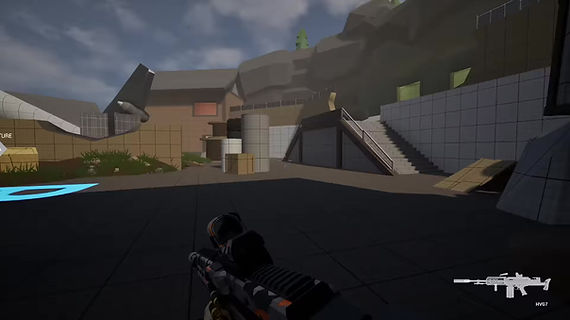
Designing a medium-sized map allowed me to successfully integrate all combat ranges, from close-quarters engagements to long-range encounters. I carefully balanced these elements across the layout to ensure players can take advantage of different weapon types and playstyles throughout the map.
Most of the long-range engagements are centered around line of sight zones, while the rest of the map is primarily designed for close and medium-range combat.
CLOSE RANGE


MEDIUM RANGE


POINTS OF INTEREST
I assigned distinctive names to each of the map’s iconic areas, allowing players to quickly orient themselves, even on their first session. These easily recognizable landmarks also serve as valuable tools for communication and callouts in competitive gameplay scenarios.
PLANE

WOOD

TRAIN

BUNKER

CONTAINER

CHOKE POINT
The choke point is a fundamental level design element. It represents a high-traffic area that players naturally use to engage in action due to its accessibility.


In this case, the choke point is positioned directly in front of point B on the map, creating a wide-open zone with multiple lines of sight and firing angles, which encourages strategic positioning and engagements.


UNDERGROUND
Integrating an underground passage added tactical depth to the map by enabling players to bypass high-risk zones such as no man's land and execute flanking maneuvers to capture objectives or surprise opponents. The central laboratory not only supports this gameplay dynamic but also plays a key role in establishing the map’s unique identity and atmosphere. Without it, the overall tone of the environment would feel significantly less impactful.

The laboratory features two main entry points, one positioned near the plane crash site, creating a visually striking and central access route, and another located on the left side of the map, offering players an alternative flank. This layout supports diverse tactical options and promotes fluid navigation through the environment.


LEARNING
This project allowed me to refine my understanding of lighting by experimenting with different setups to enhance mood and readability. I also developed skills in optimizing performance by monitoring engine viewports and diagnosing potential bottlenecks. Additionally, I explored advanced fog settings to reinforce environmental identity and create a cohesive visual atmosphere.
It also taught me the importance of iteration achieving strong results often requires multiple attempts and refinements. Working on a multiplayer map proved to be more complex than expected, as it requires stepping into the players perspective. Every design choice must account for different playstyles to ensure the map remains balanced, engaging, and accessible to all types of players.
bottom of page